How to Say No to a Customer in Retail: Show the Try
● READ THIS BEFORE THE DOORS OPEN
The fastest way to get yelled at is a fast no. When you glance at a receipt for two seconds and say "That's past the return window," the customer doesn't hear a policy. She hears that you didn't even try.
Saying no to a customer in retail is a process problem, not a wording problem. People accept an answer they dislike when they believe the process behind it was fair, and at a register, fair means one thing: she has to see you try. The move that makes the try visible takes ten seconds and works for final sale, no receipt, and closed return windows. I call it Show the Try.
This is the second post in my peak-season series for store managers, assistant managers, and the trainers getting teams ready for Black Friday through January. The first one, The Sidestep, is about taking away the customer's audience. This one is about the ten seconds before every no.
Want the exact words for the rest of peak season? My 57 Phrases for Handling Difficult Customers covers the no, the refund you cannot give, and the customer who will not stop. Get the 57 Phrases sent to you.
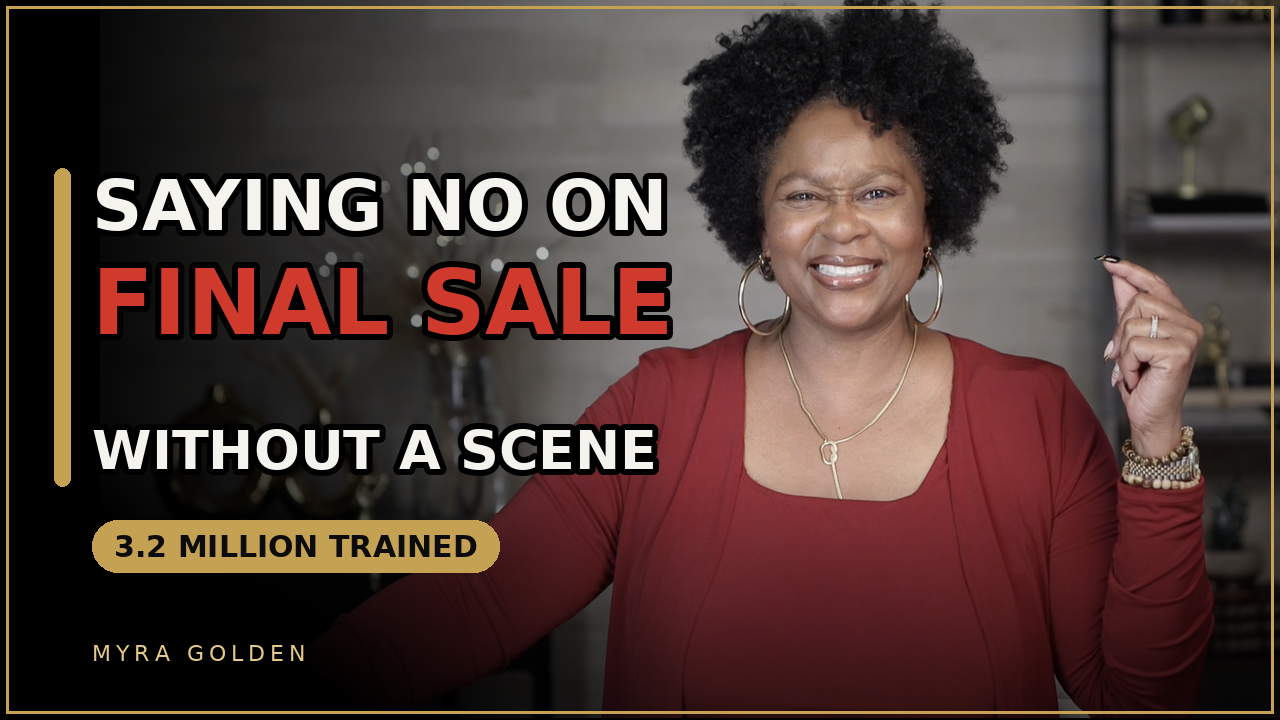
Here is the video version. Managers, this one is built for the huddle.
● THE SCIENCE
She doesn't hear your no. She hears whether you tried.
There is fifty years of research behind this. In 1975, psychologists John Thibaut and Laurens Walker showed that people judge a decision by the fairness of the process that produced it, not only by the outcome. Later work confirmed it again and again: people accept a negative answer without resentment when they believe the process was fair. Psychologists call it the fair process effect.
Now put that at a register in December. The customer with a no-receipt gift is not evaluating your return policy. She is evaluating you. Did this person look? Did this person try? A two-second glance and a policy quote answers both questions with a no, and once she believes nobody tried, she stops caring what the answer was.
A person who thinks nobody tried stops caring what the answer was. The fight is about the ten seconds before the no, not the no itself.

● WHY THIS SEASON IS HARDER
Peak season is nothing but hard answers.
Gifts with no receipt. Final sale. A return window that closed the week before she got the gift. Returns now run close to 16 percent of all retail sales, two out of three retailers say updating their returns process is a priority this season, and three out of four expect return fraud to get worse during the holidays. Every one of those numbers turns into a harder answer at your register.

You cannot change the answer. Most of the time, neither can your associate. What you can change is the ten seconds before it, and that is where the customer decides whether this is a fight.
● HERE'S THE MOVE
Show the Try: Look, Tell, Open.

Show the Try is a three-move technique for the ten seconds before a no. It requires no authority your associate does not already have, it works with any return policy, and it drills in ninety seconds.
1
Look. Check out loud.
Before you say a word about policy, say "Let me look at two things for you." Scan the tag. Pull up the order. Do it even when you already know the answer. You are not stalling. You are making the try visible, and visible is the whole point. She cannot give you credit for a try she did not see.
2
Tell. The reason before the no.
Not "Unfortunately, I can't." That word tells her a fight is coming, and "I can't" makes the policy personal. Say "This one was marked final sale, so I'm not able to refund it." Reason first, no second. When the reason comes first, the no sounds like information instead of rejection.
3
Open. The next sentence is a door.
The very next thing out of your mouth has to be something you can do. "What I can do today is put this toward an exchange for anything in the store." One thing you are able to do, said before she has to ask for it. The customer who has to ask what her options are has already decided you were not going to offer any.

✖ NEVER THIS
"That's final sale, sorry." Six words, two seconds, and she leaves believing nobody tried. Same policy as Show the Try. Completely different December.
● HEAR THE DIFFERENCE
Same policy. Same outcome. Different ten seconds.
THE FAST VERSION
"That's final sale, sorry."
THE SHOW THE TRY VERSION
"Let me look at two things for you. This one was marked final sale, so I'm not able to refund it. What I can do today is put it toward anything in the store. Want to take a look?"
Read those two out loud. The policy did not move. The refund did not appear. The only thing that changed is that the second customer watched somebody try, and that is the customer who comes back in January.
● SAY IT WITH ME
Show the Try, for the four hardest no answers this season.
NO RECEIPT
"Let me look at two things for you. This one came without a receipt, so I'm not able to do a cash refund on it. What I can do today is put the current value toward anything on the floor. Want to take a look?"
FINAL SALE
"Let me pull this up. It was marked final sale at the register, so a refund isn't something I'm able to do. What I can do is help you find the right size or an exchange today. Which helps you more?"
THE WINDOW CLOSED
"Let me check the date on this. The window closed on the ninth, so I'm not able to refund it. Here's what I can do: a store credit for the full amount, or an exchange right now. Your call."
THE ONLINE CHARGE YOU CAN'T TOUCH
"Let me look at your account with you. That charge came from the online side, and I'm not able to reverse it from this register. What I can do is write down exactly who can and what to tell them, so you're not starting over."
Give your whole store Show the Try before Black Friday.
De-escalation Academy is the self-paced course your associates can finish in a lunch break, with the exact words for every no.
● MANAGERS, THIS IS YOUR HUDDLE
The cheapest de-escalation tool you'll ever buy.
Show the Try lives or dies on the first line. If "Let me look at two things for you" is the reflex, the rest follows. So the drill is about that one sentence.
1
Tape it to the back of every register.
"Let me look at two things for you." Where only your team can see it. It costs a sticky note.
2
Play the video in the huddle.
Four minutes. Then say the three words back together: Look, Tell, Open.
3
Run one final sale at a live register.
One plays the customer, one plays the associate. The associate has to say the Look line and physically scan something before any policy comes out of their mouth. Ninety seconds, then switch.
4
Ban one word for the season.
"Unfortunately." Make it a game. Whoever catches it buys the coffee.
Managers do not need a new return policy for peak season. They need a team that makes the try visible. Ninety seconds of practice can save a whole season.
● WHAT PEOPLE ASK ME
Saying no to customers, the questions I get most.
How do you say no to a customer in retail without making them angry?
Show the try before you say the no. Check out loud ("Let me look at two things for you"), give the reason before the answer ("This one was marked final sale, so I'm not able to refund it"), and make the next sentence a door ("What I can do today is..."). The customer decides whether to fight on process, not outcome.
What should you say instead of "unfortunately"?
Nothing. Drop the word entirely and lead with the reason: "This one was marked final sale, so I'm not able to refund it." Then say what you can do. "Unfortunately" signals a fight is coming, and "I can't" makes a policy sound personal. "I'm not able to" keeps it about the situation.
How do you handle a customer who wants a refund on a final sale item?
Look, Tell, Open. Pull the item up so she sees you check. Give the reason first: it was marked final sale at the register. Then open a door: an exchange or store credit, offered before she has to ask. The refund does not appear, but the try does, and that is what she remembers.
What is the fair process effect in customer service?
Research going back to Thibaut and Walker in 1975 shows that people accept an outcome they dislike when they believe the process that produced it was fair. At a register, fair means the customer saw you try. That is why a fast no gets you yelled at and a visible try does not.
How do I train my retail team to say no well?
Two paths. De-escalation Academy is the self-paced course associates complete individually, with team licensing for stores and districts. For a private workshop built around your return policy, your busiest register moments, and your peak calendar, work with me directly. I have trained retail teams at Walmart, Lands' End, Lowe's, and Limited Brands, and I spent eleven years on the floor myself.
Take the phrase bank with you. My 57 Phrases for Handling Difficult Customers is the full set, and it works at a register, on the phone, and in chat. Get the 57 Phrases sent to you.
Peak season is coming either way.
Walk into it with a team that knows exactly what to say when the answer is no. De-escalation Academy, self-paced, with team licensing.
MYRA GOLDEN · CONFIDENCE IN EVERY CONVERSATION
Myra Golden's De-escalation Academy
A psychology-based system that helps professionals stay calm, redirect difficult conversations, and confidently resolve interactions—even when the answer is no.
Used by teams at Fortune 500 companies and NFL guest experience organizations.
Join Myra’s Inner Circle: Insights, Strategies, and Resources for Leaders Who Demand the Best.
Be the first to receive exclusive strategies, curated resources, and behind-the-scenes insights from Myra Golden—crafted for leaders who value excellence.
Your information will remain private and protected—always.
