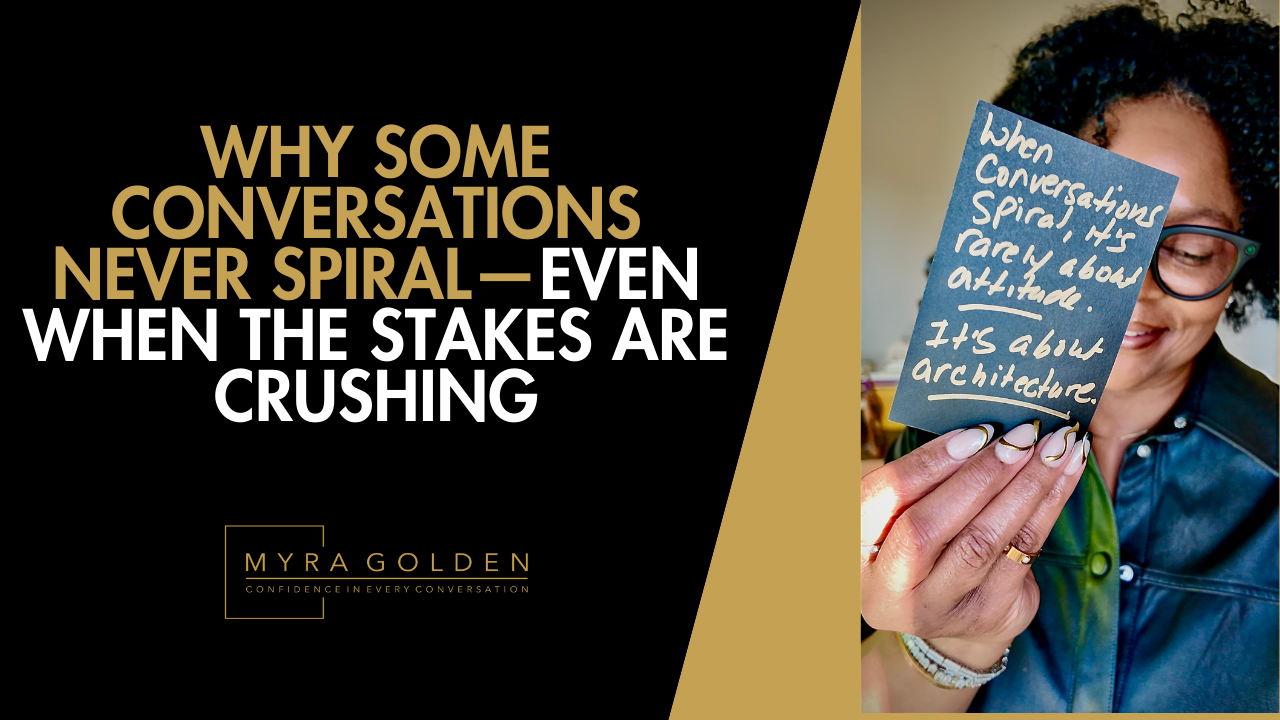
Why Some Conversations Never Spiral—Even When the Stakes Are Crushing
There are moments in life when time changes texture.
When a room feels smaller.
When the air feels heavier.
When everyone is listening, but no one knows what they’re listening for yet.
I remember sitting in that room.
My parents.
My sister.
A cardiothoracic surgeon.
No one was rushing.
No one was interrupting.
No one was trying to soften what couldn’t be softened.
And yet—somehow—the conversation didn’t break us.
In that moment, I could already see it.
I just didn’t have language for it yet.
Before He Said Anything Important, He Did Something Most People Skip
Recently, I listened to an interview with that surgeon, Michael R. Phillips, MD.
What he said stopped me cold.
He talked about how important it is for him to understand what’s happening in the lives of his patients before they ever sit down in his office.
Not medically.
Personally.
He talked about how difficult it is for patients and families just to walk through the door.
And he said something quietly profound:
He doesn’t take that lightly.
That’s when I recognized what I had sensed all along.
What I experienced in that room wasn’t bedside manner.
It was intentional conversation design.
That moment is what put me on the path of studying what actually holds conversations together when emotion is high—and what causes them to collapse when it isn’t.
Care Isn’t Soft. It’s Stabilizing.
He didn’t start by reassuring us.
He didn’t start by explaining procedures.
He started by acknowledging the weight of the moment.
That subtle recognition did something powerful.
It told our nervous systems: You’re safe enough to stay present.
Care, when used this way, isn’t emotional indulgence.
It’s orientation.
When people feel understood before information arrives, they stop bracing for impact. They stop interrupting. They stop mentally rehearsing worst-case scenarios.
They listen.
Care didn’t remove the gravity of that moment.
It made it bearable.
Then He Did What Most People Are Afraid to Do: He Took Control
Not control through dominance.
Not control through speed.
Not control through authority.
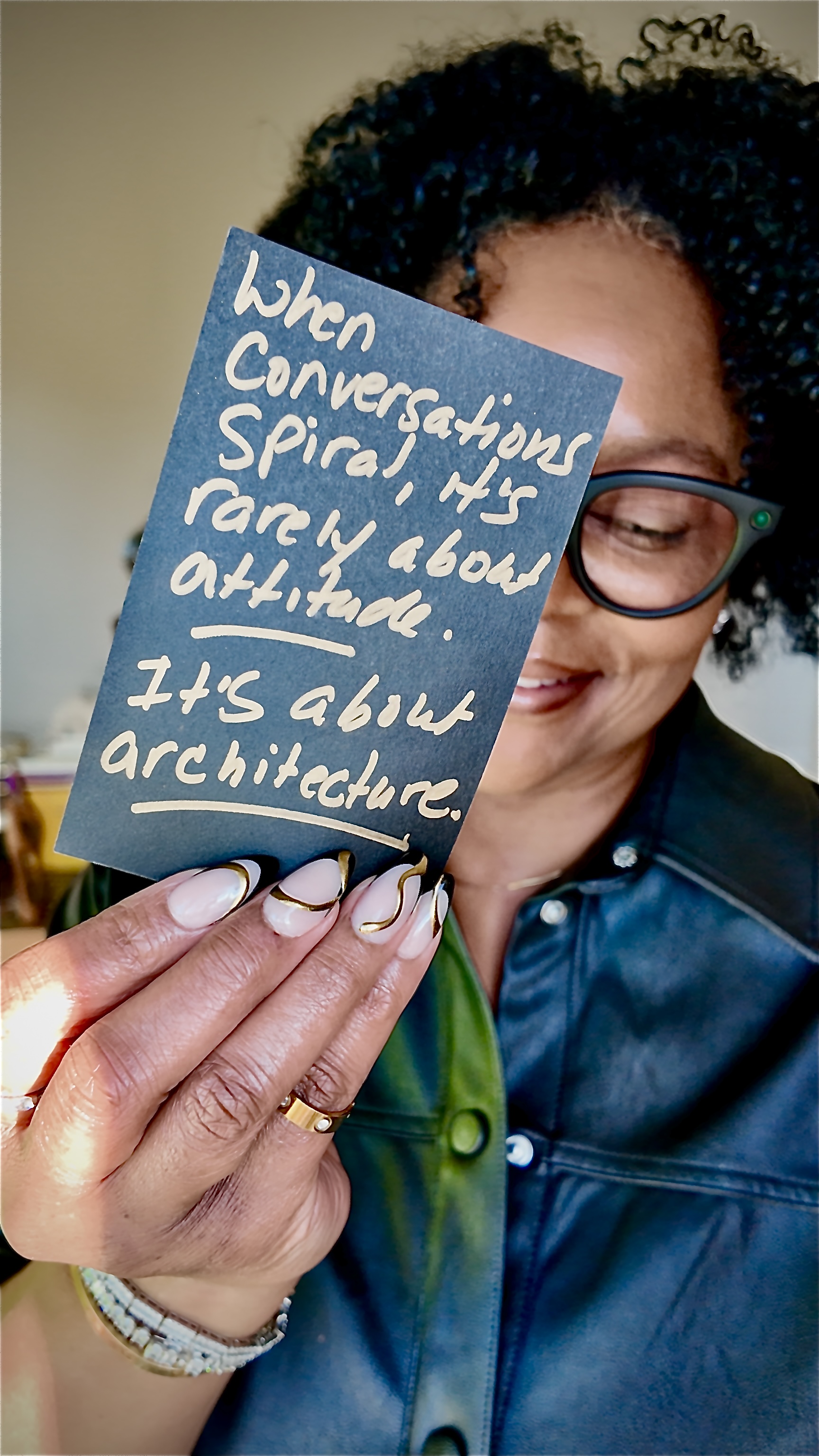
Control through structure.
The conversation had a clear shape.
What this moment means.
What needs to be understood now.
What comes next.
There was no wandering.
No emotional free-fall.
No tug-of-war between hope and fear.
The structure held us.
And when structure is present, emotion doesn’t hijack the conversation—it settles into it.
This is where most conversations quietly fail.
Not because someone is difficult.
Not because emotions show up.
But because no one designed the container—and the conversation is left to absorb the impact on its own.
Confidence Wasn’t the Cause—It Was the Result
Here’s the mistake I see everywhere.
We tell people to “be confident.”
But confidence doesn’t lead conversations.
Clarity does.
That surgeon didn’t sound confident because he felt confident.
He sounded confident because the conversation had a beginning, a middle, and an end.
When people know where a conversation is going, hesitation disappears. Over-explaining stops. Defensive language fades.
Confidence emerges after control is established.
Not before.
The Moment That Changed Everything for Me

In that interview, he said one more thing.
He talked about how important it is for patients and families to understand what happens on the other side of the procedure.
That’s when it clicked.
The conversation didn’t stay steady because the news was delivered gently.
It stayed steady because the future was visible.
When people can see what comes next, they stop fighting what’s happening now.
Uncertainty fuels resistance.
Clarity dissolves it.
Why This Applies Directly to Your World
You may not be delivering medical news.
But you are having conversations where:
-
emotions are high
-
expectations collide with reality
-
the answer isn’t what someone wants
And when those conversations spiral, we blame tone, attitude, or confidence.
Meanwhile, the real cost shows up later.
Longer conversations.
Repeat explanations.
Escalation.
Second-guessing.
That quiet dread of knowing the next conversation could go the same way.
That’s not a communication failure.
It’s an architectural one.
When care is established first,
when control is quietly built in,
when confidence is allowed to emerge naturally…
Conversations don’t escalate.
They resolve.
This Is the Work I Do Now

I recognized this pattern in the most emotionally charged room of my life.
And I’ve spent my career studying what allows conversations to hold—under pressure, under emotion, under resistance.
What most people never realize is this:
This structure can be installed on purpose.
Even in everyday conversations.
Even when the stakes feel lower.
Even when resistance shows up fast.
Once you see it, you can’t unsee it.
The Only Logical Next Step

Reading this may have given you language for something you’ve felt for a long time.
That difficult conversations don’t fall apart because people lack empathy, confidence, or patience.
They fall apart because no one showed them how to control the conversation without controlling the person.
The Conversation Control Masterclass is where I show you how this structure actually works—and how to apply it deliberately, not instinctively.
Not someday.
Not after another spiraling conversation.
Now—while you’re seeing this clearly.
Register for the Conversation Control Masterclass here.

If this resonated, it’s probably because you’ve felt it too.
That conversations don’t fall apart because people lack empathy, patience, or confidence.
They fall apart because no one showed them how to control the conversation without controlling the person.
That’s exactly what I teach inside the Conversation Control Masterclass.
Not scripts.
Not personality fixes.
But how to design conversations that cannot spiral—because the structure won’t allow it.
If you’re ready to understand how this works—and how to use it deliberately—
👉 Register for the Conversation Control Masterclass here:
Because once you understand why conversations spiral,
you stop hoping they won’t.
You design them so they can’t.
Myra Golden's De-escalation Academy
A psychology-based system that helps professionals stay calm, redirect difficult conversations, and confidently resolve interactions—even when the answer is no.
Used by teams at Fortune 500 companies and NFL guest experience organizations.
Join Myra’s Inner Circle: Insights, Strategies, and Resources for Leaders Who Demand the Best.
Be the first to receive exclusive strategies, curated resources, and behind-the-scenes insights from Myra Golden—crafted for leaders who value excellence.
Your information will remain private and protected—always.
