When AI Is Polite But Customers Still Escalate: The Missing Structure That Changes Everything
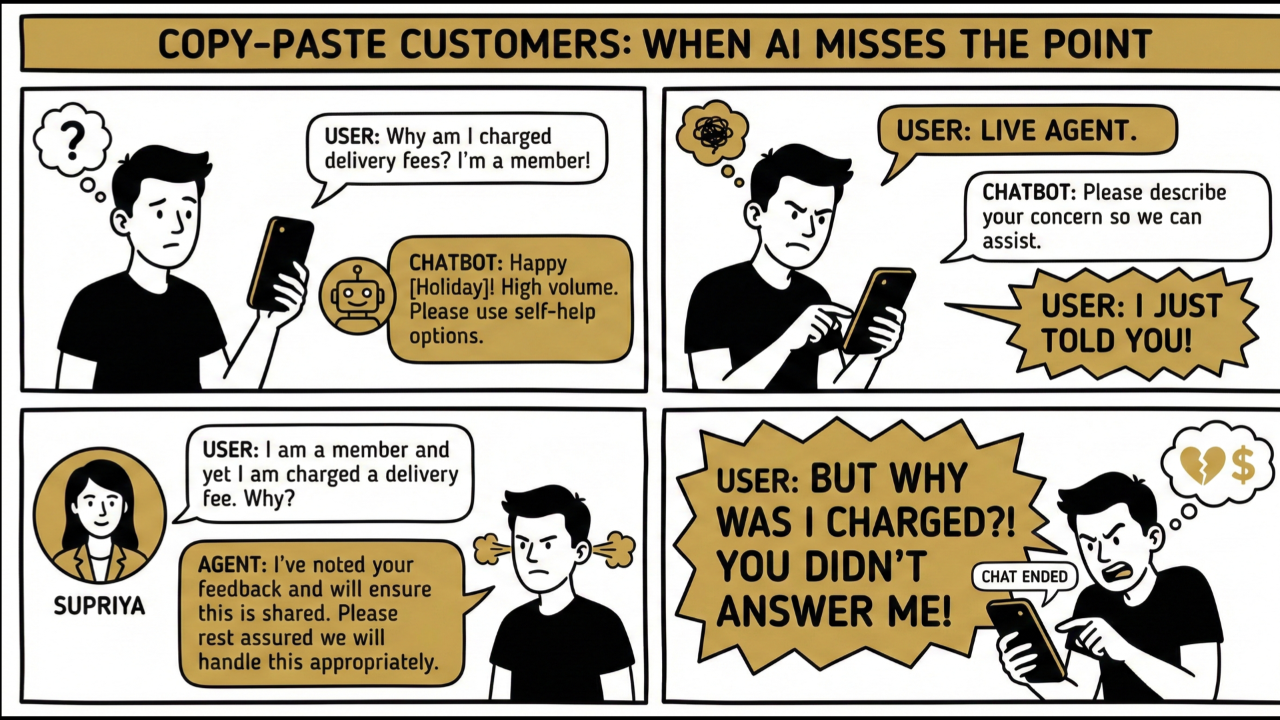
Picture this: you're monitoring a customer chat where AI handled the initial interaction. The customer asked a simple question about fees, the system responded politely, but somehow the conversation spiraled into fifteen minutes of confusion before a human agent had to step in. Sound familiar?
I recently experienced this exact scenario as a customer myself, and it revealed something crucial that most organizations are missing as they expand their AI customer service capabilities. The problem wasn't that the AI was rude or unhelpful. It thanked me for my membership, provided information that sounded relevant, and maintained a professional tone throughout. But here's what went wrong - it never actually held onto the objective of my question.
I found myself doing something no customer should ever have to do: copying and pasting the same sentence over and over just to keep the conversation anchored to what I actually needed. By the time a human agent joined the chat, clarity had already slipped away, and we were starting from scratch.
This isn't a story about bad technology or poor customer service. It's about something far more fundamental that's creating friction in AI-supported conversations across industries.
Why Polite AI Still Fails Customers
Most organizations believe the biggest challenge with AI customer service is tone. They spend countless hours teaching systems to sound empathetic, apologetic, or friendly. But here's what I've learned from analyzing thousands of customer interactions: customers rarely escalate because of tone alone. They escalate when conversations lose direction.
In my chat experience, acknowledgment showed up before understanding. The system reacted to keywords instead of tracking the real objective. The conversation drifted into generic explanations that didn't answer my original question. Eventually, compensation was offered - even though clarity had never been delivered.
Credits can end a transaction, but they don't resolve a conversation.
This is the hidden friction in AI-supported customer service that's costing organizations more than they realize. When conversations lack structure, even the most sophisticated technology becomes a barrier instead of a bridge to resolution.
The Gap Between Technology and Conversation Architecture
As companies invest in faster tools and smarter automation, a critical gap is forming between their technology stack and their conversational architecture. Most organizations are upgrading their systems, but very few are upgrading the structure that guides their conversations.
Without proper conversation structure: - AI can acknowledge a customer without anchoring to their actual issue - Human agents inherit conversations that already lack clarity - Customers end up repeating themselves just to stay on topic - Interactions stretch longer than necessary - Escalations happen not because of attitude, but because of confusion
This isn't a technology problem - it's an operating system problem.
The most advanced AI in the world can't compensate for missing conversation structure. When the framework for how conversations should flow is absent, even human agents struggle to create clarity and resolution.
What This Looks Like in Real Time
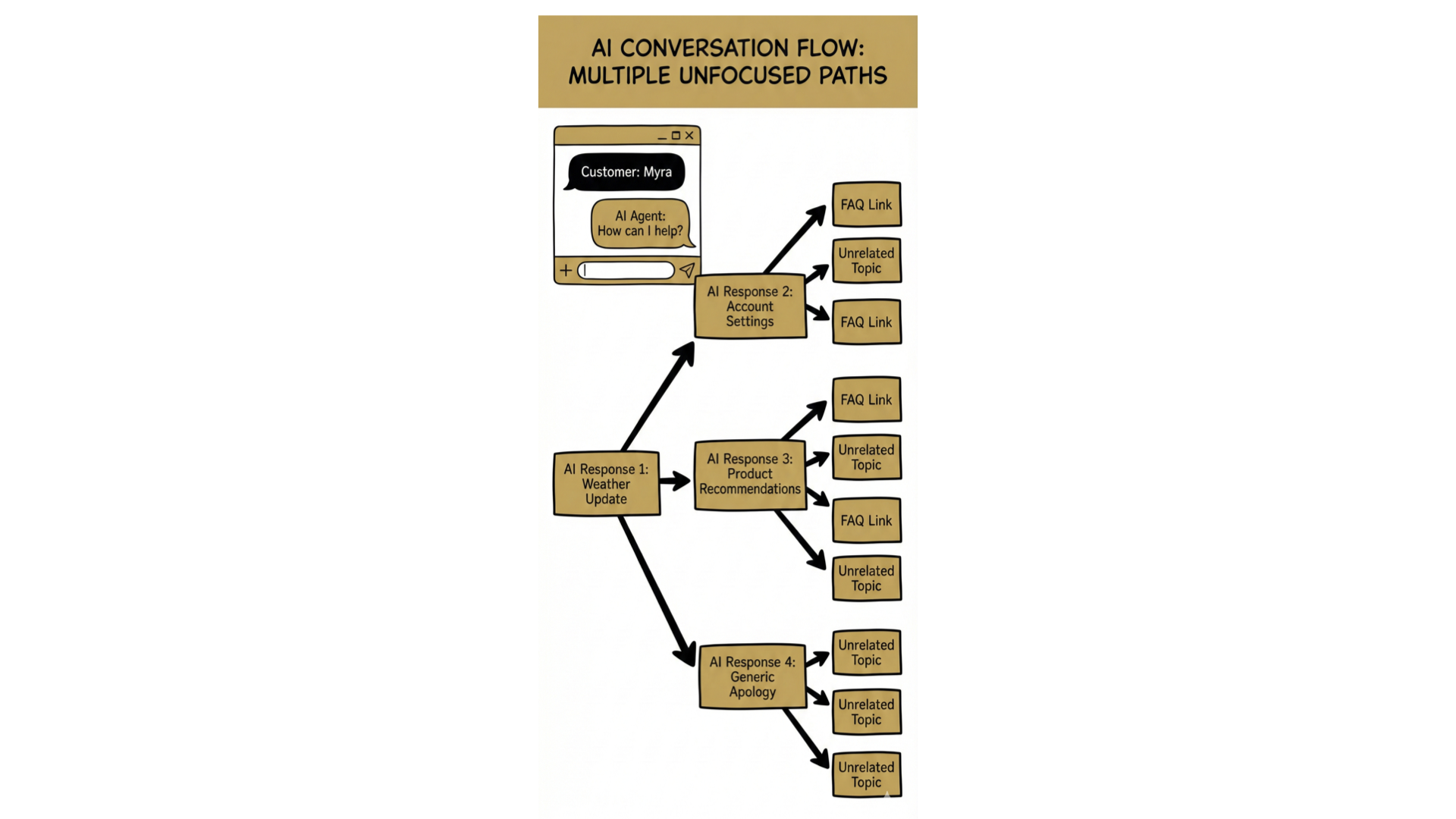
You've probably seen this pattern in your own organization: - Customers ask straightforward questions but receive generic responses - Conversations drift away from the original issue - Multiple contacts are required for simple resolutions - Agents offer compensation instead of addressing the root problem - Customer satisfaction scores remain flat despite technology investments
These aren't signs of bad AI or undertrained staff. They're symptoms of conversations that lack proper architecture.
The Three-Part Framework That Changes Everything
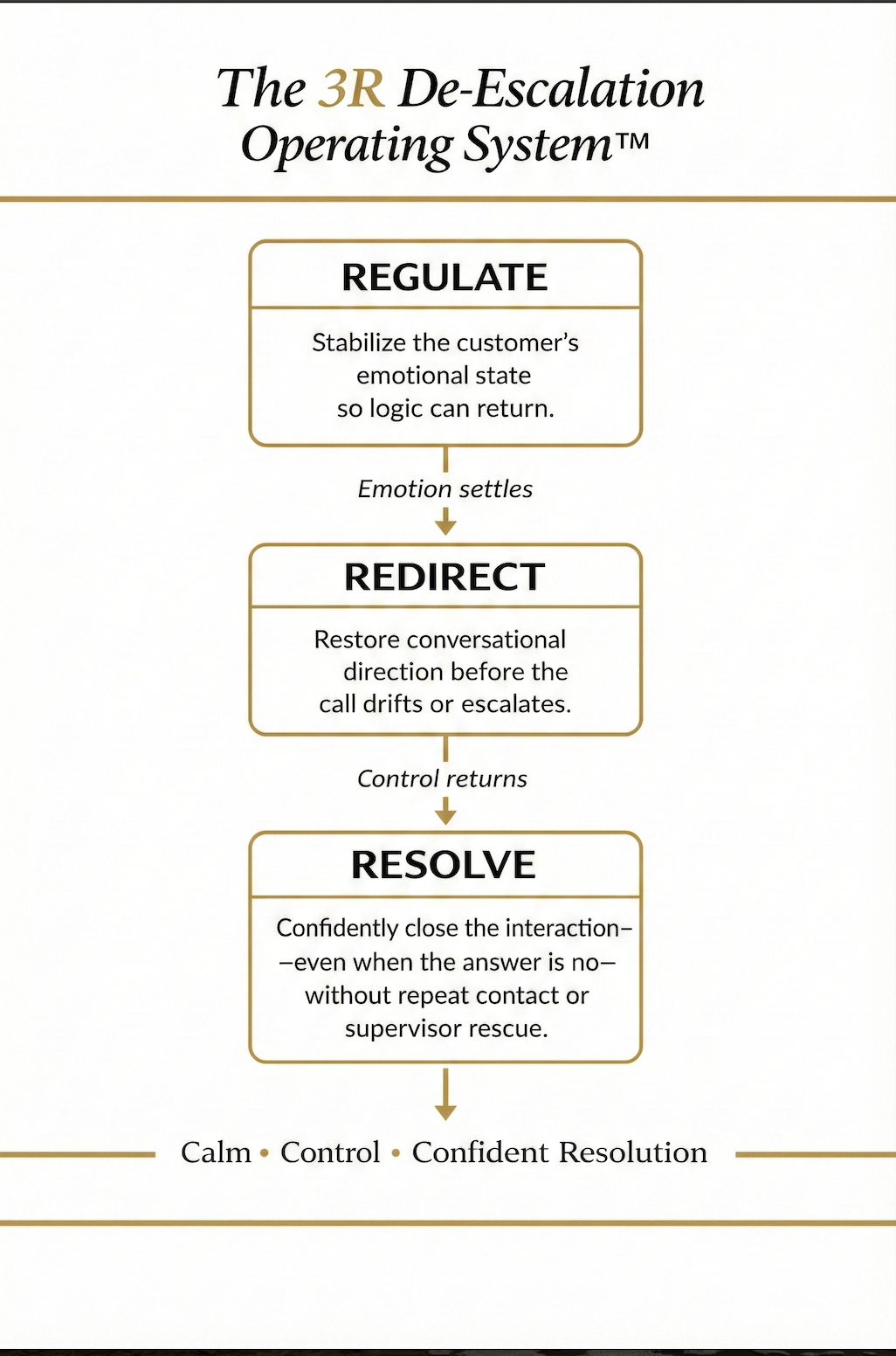
My work doesn't focus on removing AI from customer experience. Instead, I help organizations install a framework that allows AI and humans to operate with the same conversational intelligence.
When proper structure is present, three things happen automatically:
Regulation creates psychological clarity so customers feel understood without requiring scripted empathy. The conversation feels steady and purposeful from the start.
Redirection keeps conversations anchored to the objective so interactions don't drift into irrelevant territory. Every response moves toward resolution.
Resolution clearly closes the loop with explanation and confidence so organizations aren't relying on credits or compensation to maintain satisfaction.
The outcome? Fewer escalations, fewer repeated contacts, and conversations that actually reach meaningful closure.
Why Structure Matters More Than Intelligence

The future of customer experience won't be decided by whether interactions are human-led or AI-assisted. It will be shaped by whether conversations are guided by clear structure.
Organizations that invest only in tools may see short-term efficiency gains. But organizations that invest in conversational architecture create experiences that feel intelligent regardless of whether automation is involved.
When I think about my own chat experience, the issue wasn't that AI couldn't understand my question. The issue was that the conversation itself had no operating system to keep it on track. Without structure, even the most advanced technology becomes just another way to create confusion.
The Real Cost of Missing Structure
If you've ever watched a conversation stretch longer than it should, escalate unnecessarily, or end with compensation instead of understanding, you're seeing the cost of missing structure in real time.
These aren't isolated incidents - they're predictable outcomes when conversations lack proper architecture. And as more organizations integrate AI into their customer service operations, this problem is only going to grow.
Building Conversations That Actually Work
The question is no longer whether AI belongs in customer conversations. The real question is whether the conversation itself has an operating system that guides it toward resolution.
This means rethinking how we approach customer service training and technology implementation. Instead of focusing solely on what to say or how to sound, we need to focus on how conversations flow from problem identification to clear resolution.
When structure is installed properly, both AI and human agents can operate with greater clarity. Customers feel heard and understood. Conversations reach meaningful conclusions. And organizations see real improvements in efficiency and satisfaction.
The most successful customer service operations of the future will be those that recognize conversation structure as their foundational operating system - not just another nice-to-have feature.
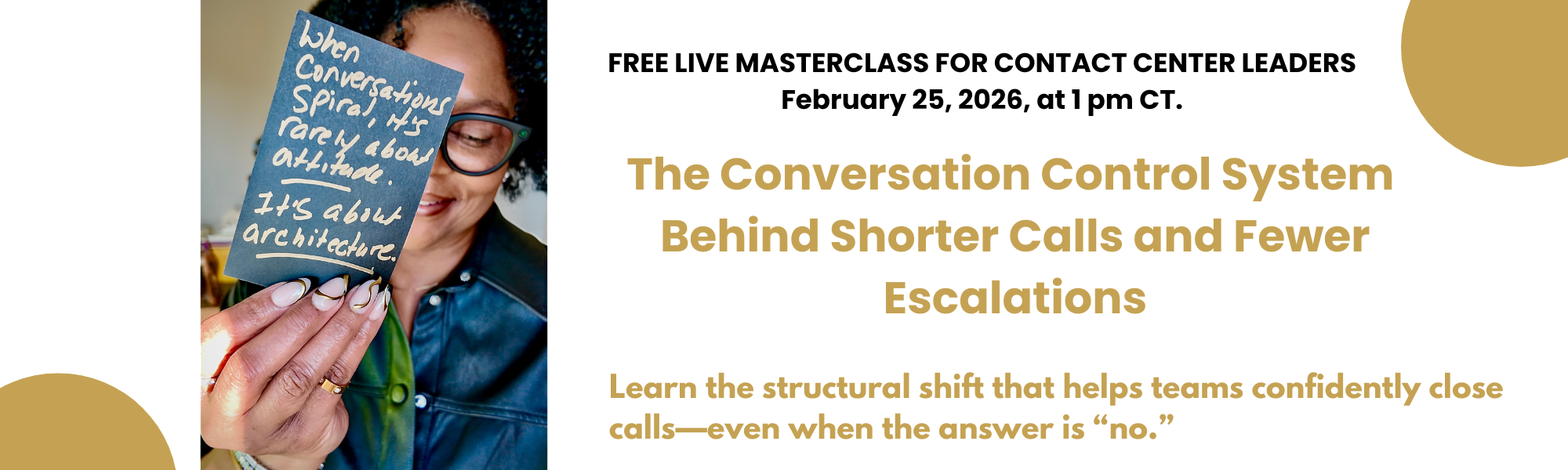
Your customers are already telling you when this structure is missing. They're repeating themselves, asking for supervisors, or accepting compensation when they really just wanted clarity. The question is: are you ready to give them the conversational architecture they deserve? If so, join me for a live masterclass: Live Conversation Control.
Save My Seat
Myra Golden's De-escalation Academy
A psychology-based system that helps professionals stay calm, redirect difficult conversations, and confidently resolve interactions—even when the answer is no.
Used by teams at Fortune 500 companies and NFL guest experience organizations.
Join Myra’s Inner Circle: Insights, Strategies, and Resources for Leaders Who Demand the Best.
Be the first to receive exclusive strategies, curated resources, and behind-the-scenes insights from Myra Golden—crafted for leaders who value excellence.
Your information will remain private and protected—always.
