The Job Title That Tells You Where Customer Service Is Going
Section Manager.
I had no idea what that meant. So I asked. And here is what I learned, at least at that company. A Section Manager did not manage people. No direct reports. What you managed was a process or a function. In my case, I was a Training Section Manager. I researched, designed, and built learning and development. I delivered the training myself. I owned the function, not a team of humans.
I have been thinking about that title a lot lately. Because I believe Section Manager is a preview of where customer service is heading.
That is my prediction. I have not seen a research report name it this way. This is coming from what I am watching in the market and what I am living inside my own business right now. This is also the work I bring to teams live, at myragolden.com/virtual.
What is actually happening to the customer service representative job?

The role is being promoted, not erased. The volume work is moving to AI. The judgment work, the human work, the work that requires a person who can settle a frightened customer, is moving up to a smaller number of humans who will manage the systems doing the volume. That is the whole shift in one sentence.
You already know the layoff headlines. They are real, and they are painful, and I am not going to wave them away. AI has been linked to tens of thousands of job cuts in the last year. If you lead a contact center, you have felt the fear move through your floor even if your own company has been slow to adopt.
But sit with the part of the story the headlines skip.
What does the data actually say about AI and customer service jobs?
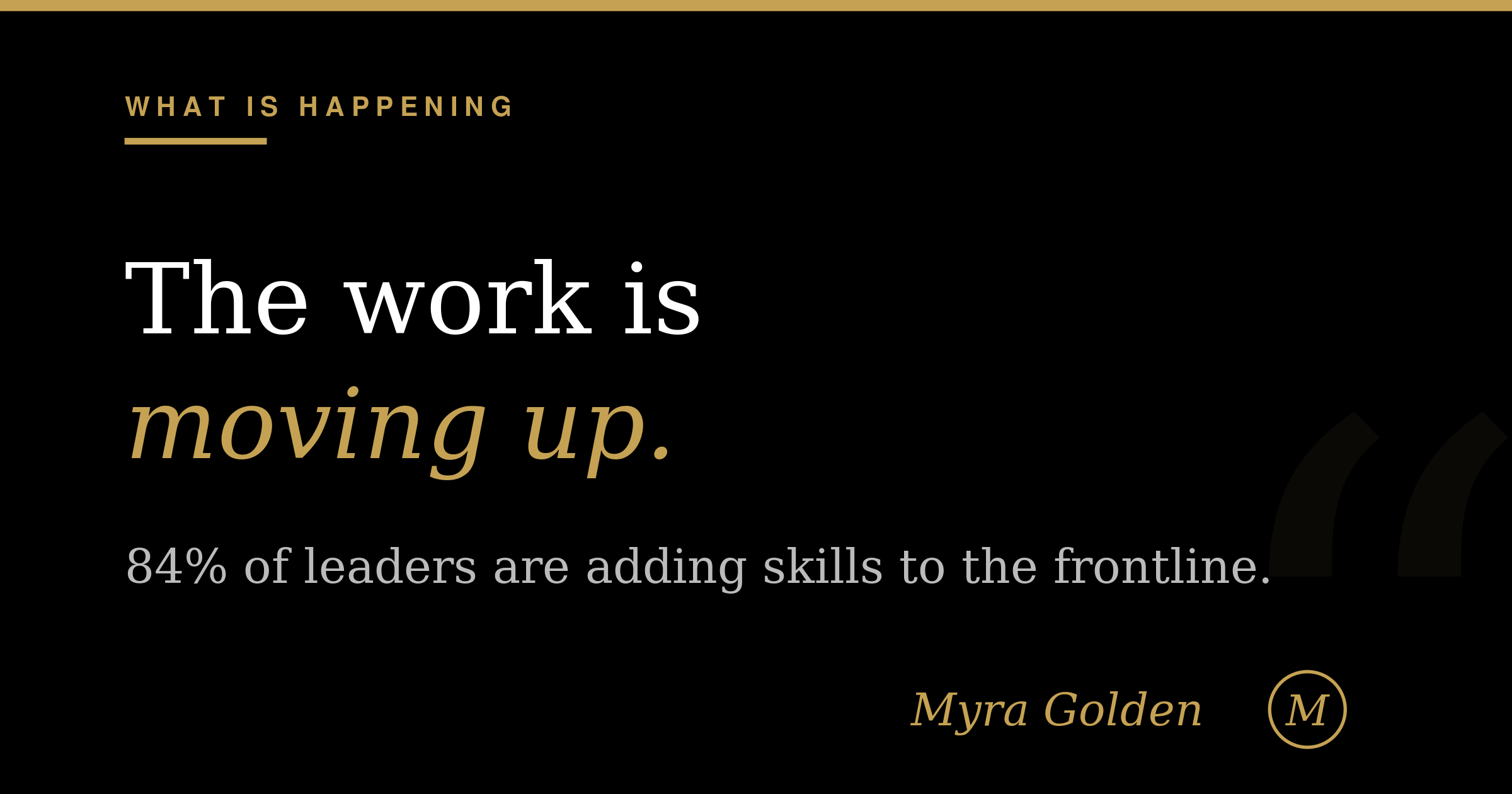
The data says the opposite of the headlines. When Gartner surveyed customer service leaders, only one in five organizations had reduced agent headcount because of AI. Nearly 80 percent said they plan to move agents into new roles, not out the door. And 84 percent plan to add new skills to the frontline job.
Then there is the prediction that stopped me cold. Gartner expects that by 2027, half of the companies that cut customer service staff because of AI will rehire people to do similar work, just under a different job title.
Read that again. A different job title.
That is the whole thing right there.
What is the Section Manager version of the customer service job?
It is the version where your rep stops being the doer and starts being the manager of the doers. Right now, the frontline job is volume. You answer the emails. You work the live chat. You take the calls. You document. You follow up. And your manager scores you on tone, empathy, and average handle time. You are measured on how fast and how kindly you move through the pile.
I think we see far less of that.
I think the customer service representative becomes something closer to a customer AI manager. You are not the one personally clearing the queue. You are managing the systems that clear the queue, and you step in where judgment, repair, and humanity are required. The bot fails. The situation is delicate. The customer is past the point a script can reach. That is your work now. Everything underneath it is managed, not manually done.
In other words, the frontline person stops being the worker and becomes the Section Manager. You manage a function, not a pile of tasks.
I am not guessing at this from the outside. I am living it.
How do I know this shift is real?
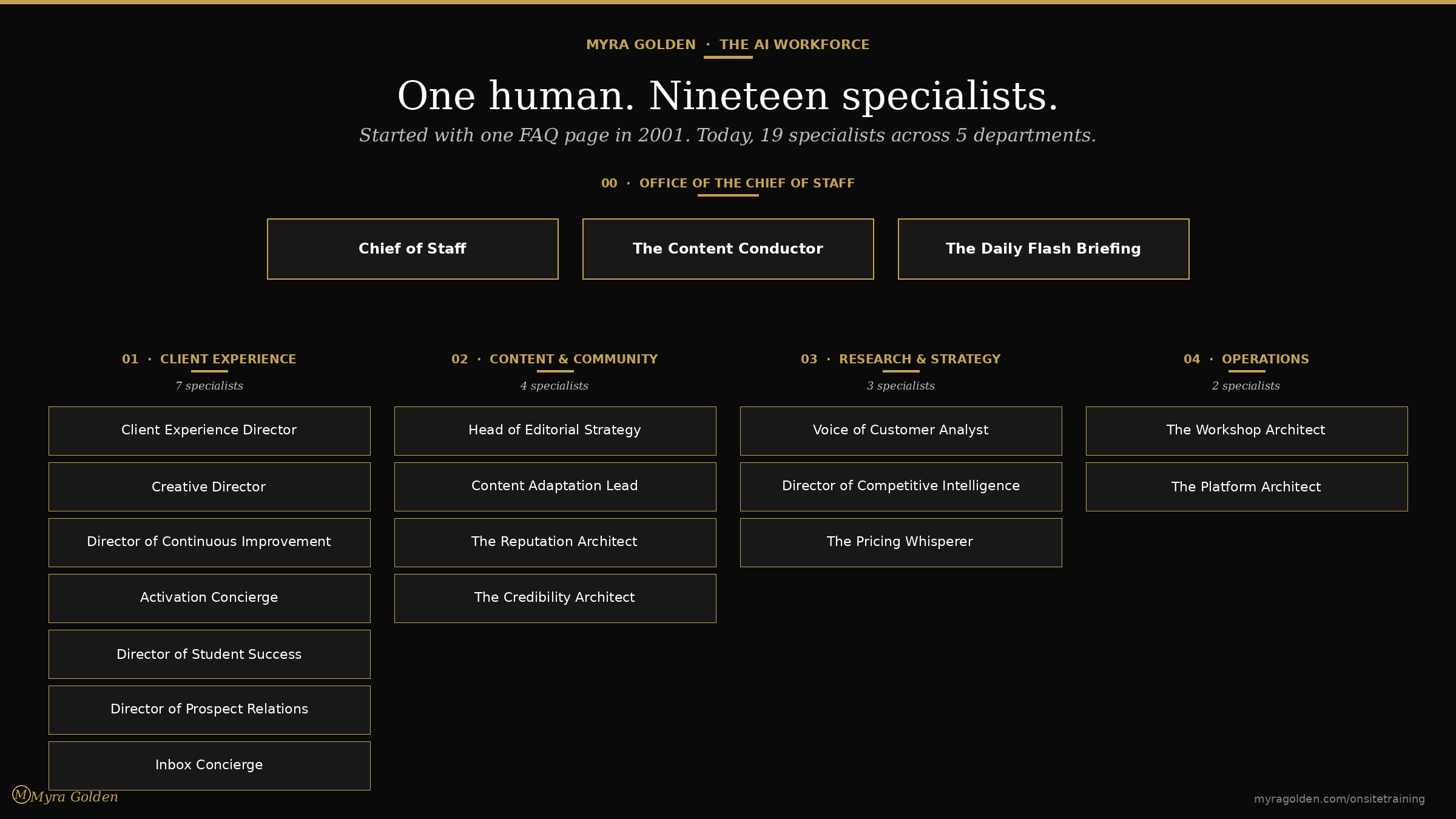
I know because I am running it inside my own business. In my own office, it is just me. One person.
But I am running a workforce of AI roles I have built and trained. One manages my client experience. One runs my digital classroom experience. One writes my marketing content. One designs my website. I have a chief of staff role sitting over all of it.
And here is the honest truth about my day. I have not stopped doing the work that requires me. This week I led two workshops. Later today I guest on a podcast. I still travel. I still speak. I still deliver keynotes. I still sit across from clients. The human-facing work is still all mine, and it always will be.
What I gave away is the clerical layer. The intern work. The assistant work. The follow up, the documentation, the first drafts. I do not do that work anymore. I manage the roles that do it.
My actual job changed. I am not the doer. I am the manager of the doers. I am, functionally, the chief of staff of my own operation.
And I can already see the next step. I can imagine hiring a human whose entire job is to manage my AI roles. Not to do the clerical work. To direct the systems that do it.
That is exactly what I think is coming to contact centers. Not the end of the frontline. The promotion of the frontline.
What is the 3R Conversation Control System and why does it matter more now?
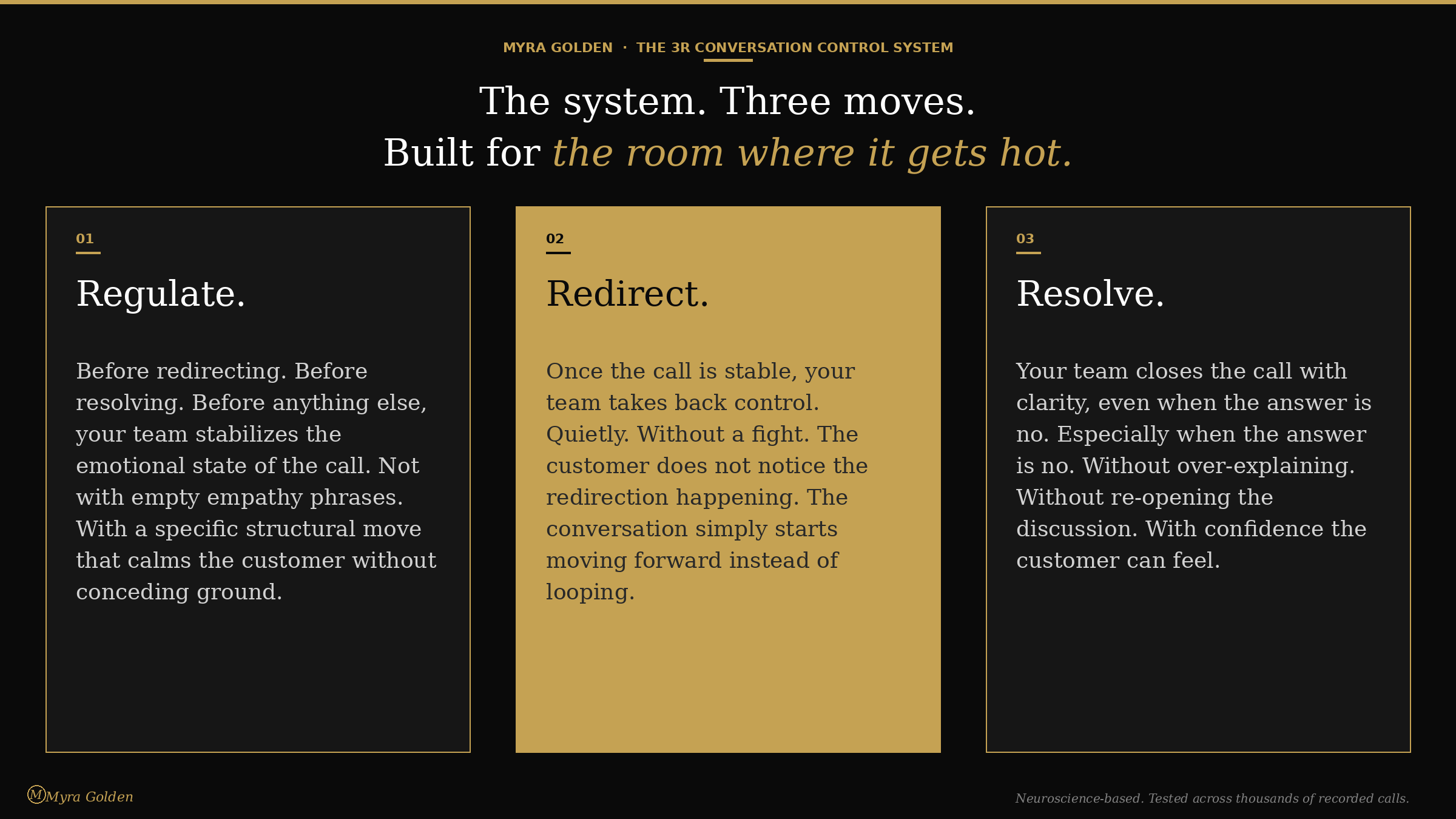
The 3R Conversation Control System™ is the language method I built across 25 years of teaching frontline teams. Regulate. Redirect. Resolve. It brings the emotional temperature of a hard call down in the first ten seconds, moves the customer from the emotional brain back to the problem-solving brain, and closes the loop so they feel heard. It is neuroscience-based and tested across thousands of recorded calls.
Here is why it matters more in the Section Manager era, not less.
When the bot fails, the customer is not at the start of the conversation.
They are five minutes in, sometimes fifteen, and they are already past the point a script can reach. They have repeated
themselves. They have been routed. They have been told to hold. By the time a human picks up, the conversation is on fire.
That is the moment your team has to be trained for. Not the polite first call. The handed-off call. The bot-failed call. The call that hits the floor already escalated.
The skill of regulating a customer in the first ten seconds of that handoff is not a soft skill. It is the central skill of the Section Manager job. The volume work goes to the machine. The fire work stays with the human.
Why are most leaders preparing their teams for the wrong job?
They are still measuring the old job. Most teams are still scored on average handle time, tone on a polite first call, and how many tickets they cleared. Those scorecards belong to the old job. The pile-clearing job.
The new job has different scorecards. How fast can your rep regulate a customer the bot just dropped. How cleanly can they read what the situation actually needs, not what the script says. How well can they hand the conversation back to the system once the human moment is done. That is the work nobody is training for yet.
If you are still training your team on the volume version of the role, you are training them for a job that will not exist in three years. You are also missing the chance to prepare them for the one that will.
What can you do with your team this Monday?
Pick one call from last week where your rep took over from a bot or a hold queue. Listen to the first ten seconds. Just the first ten seconds. Ask one question. Did the rep regulate the customer, or did they jump straight to solving?
That is the entire diagnostic.
If they jumped to solving, the customer is still in the emotional brain, and the call is going to take twice as long and end worse than it had to. If they regulated first, you will hear the temperature drop in real time. The customer's pace will slow. The breath will come back. The words will get smaller.
That ten seconds is the Section Manager skill. Most reps were never taught it because the old job did not require it. The new job will not function without it.
Grab the Section Manager's Playbook.
Where I come in
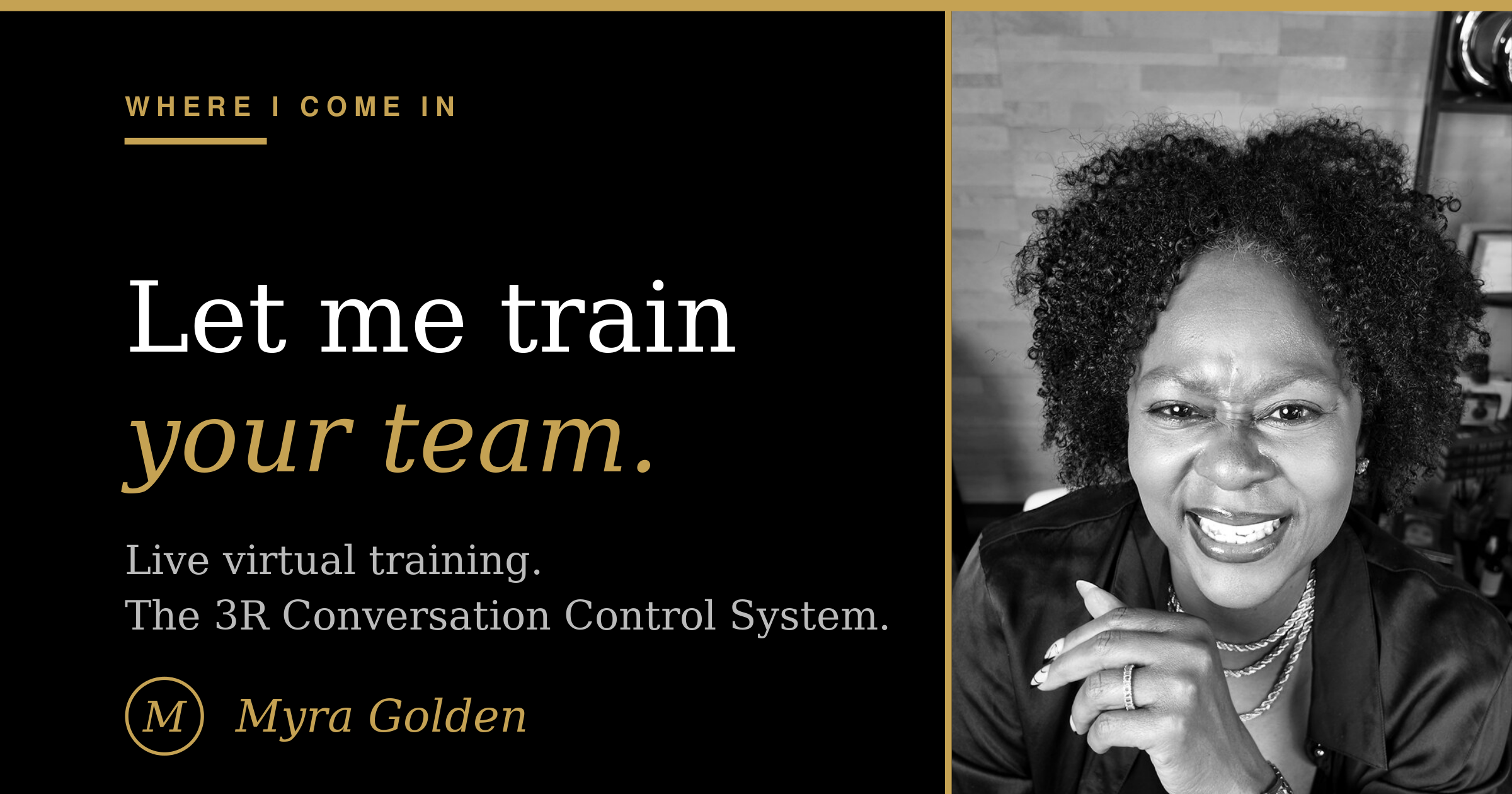
This is the work I am building everything around. Not AI avoidance. Not fear. The judgment layer. The human moments the machine hands back to you, usually at the worst possible time, with the customer already upset.
I bring it to teams live, on Zoom, up to two and a half hours, built around your actual recorded calls. We rehearse the first ten seconds of the bot-failed call. We rehearse the redirect. We rehearse the close. By the time we finish, your team has language for the moments that used to derail them.
If you lead a team of eleven, or two hundred, and you want them ready for the Section Manager version of the job before your competitor's team gets there first, this is the work.
See what a live virtual experience looks like at myragolden.com/virtual.
The closing thought
I started my career as a Section Manager and did not even know what it meant. Turns out it meant the future. The customer service representative is not going away. The title is changing. The job is moving up. And the people who learn to manage the work instead of drowning in it are the ones who will still be standing when the dust settles.
Train them for the new job. Not the old one.
myragolden.com/virtual
Myra Golden's De-escalation Academy
A psychology-based system that helps professionals stay calm, redirect difficult conversations, and confidently resolve interactions—even when the answer is no.
Used by teams at Fortune 500 companies and NFL guest experience organizations.
Join Myra’s Inner Circle: Insights, Strategies, and Resources for Leaders Who Demand the Best.
Be the first to receive exclusive strategies, curated resources, and behind-the-scenes insights from Myra Golden—crafted for leaders who value excellence.
Your information will remain private and protected—always.
