Stop Apologizing to Your Customers. Say This Instead.
In 1998, a man named Doug Wojcieszak lost his oldest brother.
Jim went into the hospital. The staff mixed up his chart with their father's chart. His heart attack was misdiagnosed. And Jim, who should have walked back out, did not.
What happened next is the part I want you to sit with.
The hospital went quiet.
Not cruel. Not hostile. Just quiet. The doctors stopped returning calls. The family's questions went to a lawyer, and the lawyer's answers went to another lawyer. Doug describes it as a door closing. Have your people talk to our people. There was nothing left to say, because no one was willing to say it.
So the family did the only thing the silence left them room to do. They sued. And years later, they won.
Here is what Doug figured out in the years after, the thing that turned a grieving brother into a national advocate. His family did not sue because Jim died. They sued because after Jim died, no one would talk to them. The lawsuit was not created by the medical error. The lawsuit was created by the silence that followed it.
That insight became a movement. Doug worked with a victims and families advocacy group, then founded the Sorry Works! Coalition in 2005. He co-wrote a book called Sorry Works! with two attorneys, James Saxton and Maggie Finklestein. And the argument at the center of all of it is almost too simple to believe.
When something goes wrong, the cheapest, most powerful thing an organization can do is talk to the person it went wrong for. Honestly. Early. Like a human being.
THE NUMBERS NOBODY EXPECTS
You would assume that admitting fault gets you sued more. Every instinct in a risk-averse organization says clam up, route it through legal, say as little as possible.
The data says the opposite.
The Veterans Affairs hospital in Lexington, Kentucky has run an extreme honesty policy since 1987. They disclose. They explain. They talk. And here is what happened. Lexington landed in the top quarter of comparable VA hospitals for the number of malpractice claims filed against it. And the bottom quarter for what it actually paid out. More claims. Far less cost. Because the conversations happened early, before a claim hardened into a war.
Then there is the University of Michigan Health System. In 2001 they moved to full disclosure. They tell patients what happened. They apologize when the care was unreasonable. They offer to make it right.
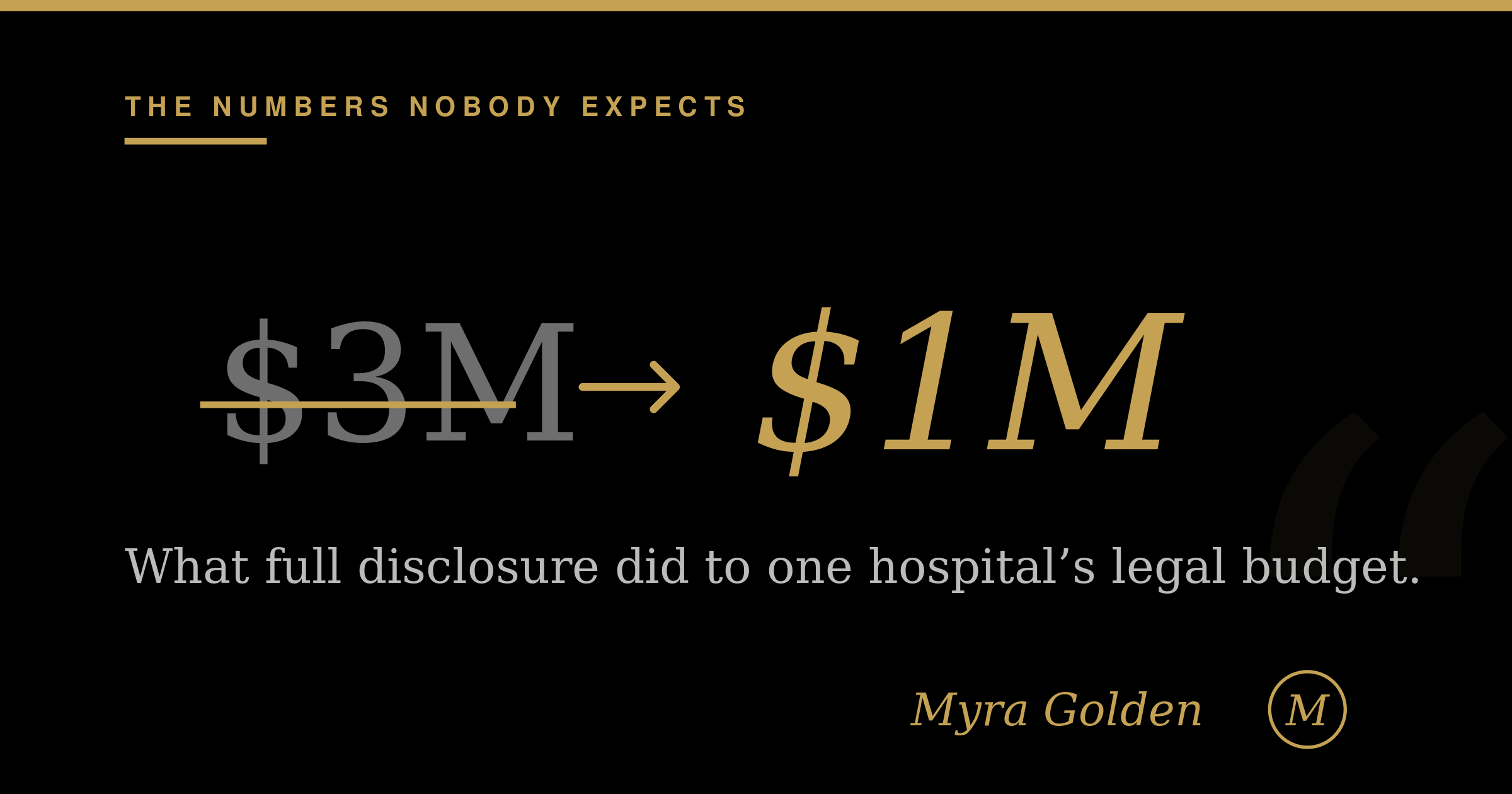
After they implemented it, new claims dropped from about seven per hundred thousand patient encounters to about four and a half. Lawsuits dropped from just over two per hundred thousand to under one, roughly a sixty-five percent fall. The average cost of a lawsuit fell from around four hundred six thousand dollars to around two hundred twenty-eight thousand. Their legal expenses dropped about sixty-one percent. Over one eighteen-month stretch, the health system's legal budget went from three million dollars to one million.
Same medicine. Same doctors. Same mistakes a large hospital will always make. The only thing that changed was whether anyone was willing to have the conversation.
Sit with that. The single highest-leverage move in one of the most litigious industries in America was not a new protocol or a new technology. It was a willingness to say, out loud, to a real person, some version of "I'm sorry."
WHY I AM TELLING YOU A HOSPITAL STORY
Because the exact same thing is happening on your phones right now. Just smaller, and a hundred times a day.
I have spent twenty-five years teaching frontline teams at McDonald's, Coca-Cola, three NFL franchises, Salesforce, Lincoln Financial, and the CDC. I have listened to thousands of recorded calls. And I can tell you that the escalated call almost never escalates because of the problem.
It escalates because of what the agent does in the silence right after the problem lands.
The customer says the thing. The shipment is wrong. The charge is a surprise. The forty-two minutes on hold actually happened. And there is a tiny gap, two or three seconds, where the conversation gets decided. In that gap, the customer is not asking for a refund yet. They are asking a quieter question. Is the person on the other end of this line going to be human with me, or is the door about to close?
Most agents, trained with the best of intentions, reach for the wrong sentence.
STOP SAYING "I APOLOGIZE"
Here is the claim, and I want you to argue with me before you finish the section. Then send me the email. I read them.
Stop training your team to apologize to customers.
There is a difference between "I'm sorry" and "I apologize," and most customer service training has the two backwards.
"I apologize" is an admission. It is ownership of a failure. Grammatically and emotionally, it says I did something wrong, or my company did something wrong, and I am claiming that fault right now. Sometimes that is exactly right, and I will get to that. But watch what happens when an agent says it reflexively. They say "I apologize for the inconvenience" before anyone knows what happened. They apologize for things that were never their fault. They apologize for things that were never the company's fault. Forty times a shift, they stand in a small verbal crouch and absorb blame for the weather, the policy, the website, the customer's own mistake.
That is not kindness. That is a person being trained, slowly, into learned helplessness. And the customer hears it. The customer's brain registers a reflexive apology the same way it registers a script. As noise. As something said to everyone. It does not land, because it was not aimed.
"I'm sorry" is a different instrument entirely.
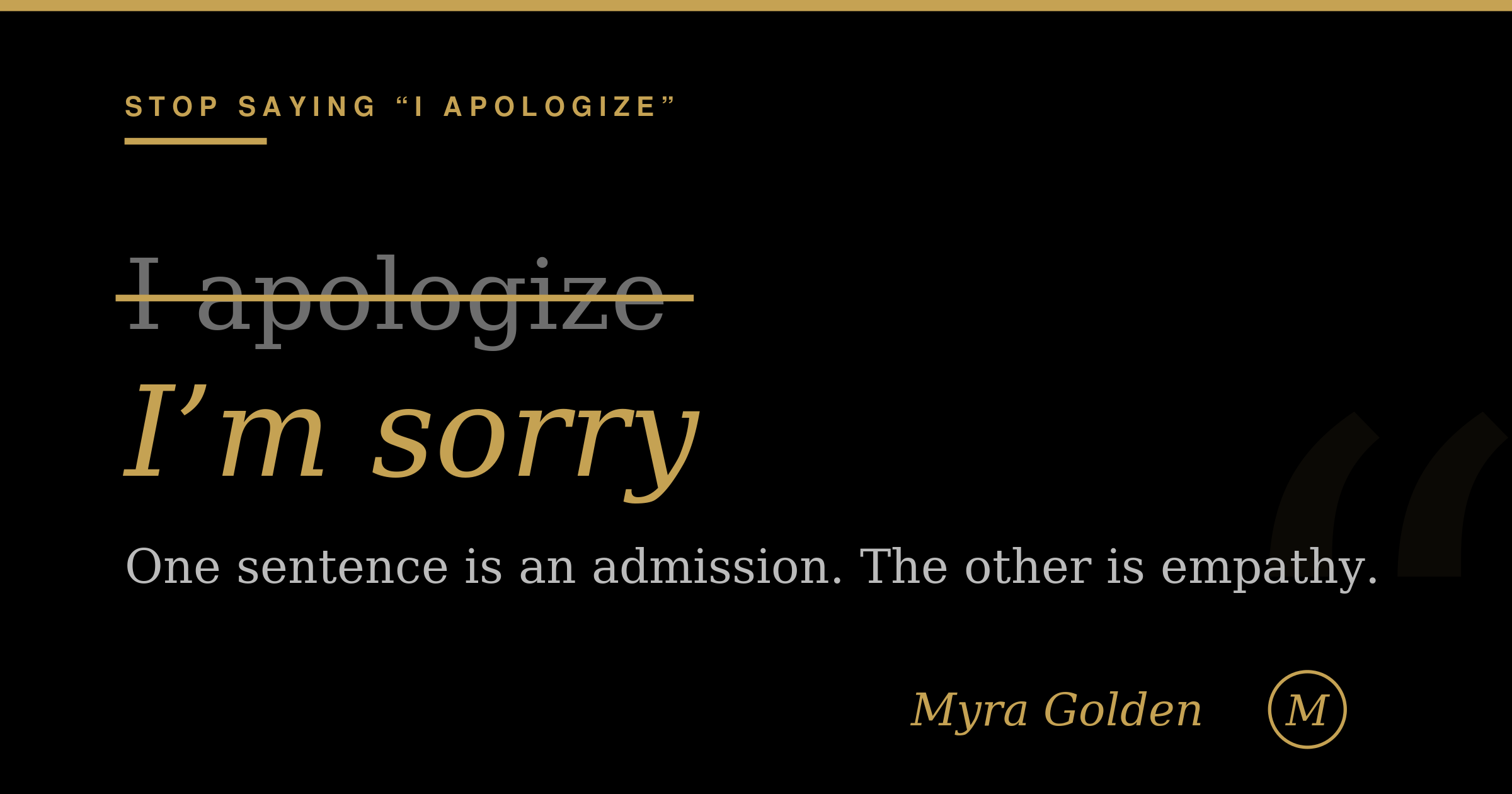
"I'm sorry" is empathy. It validates the customer's experience without conceding the company's guilt. It says I see what this has been for you. It is aimed at a person, not at a liability. And done correctly, it is the single fastest way to reopen the door that the silence was about to close.
One sentence hands the customer your company's fault on a plate. The other sentence hands the customer their dignity back. Your team needs to know, in their body, which one they are reaching for.
THE NUANCE THAT MAKES THIS UNIMPEACHABLE
Now, hear me clearly, because someone in your comments is going to want to fight about this.
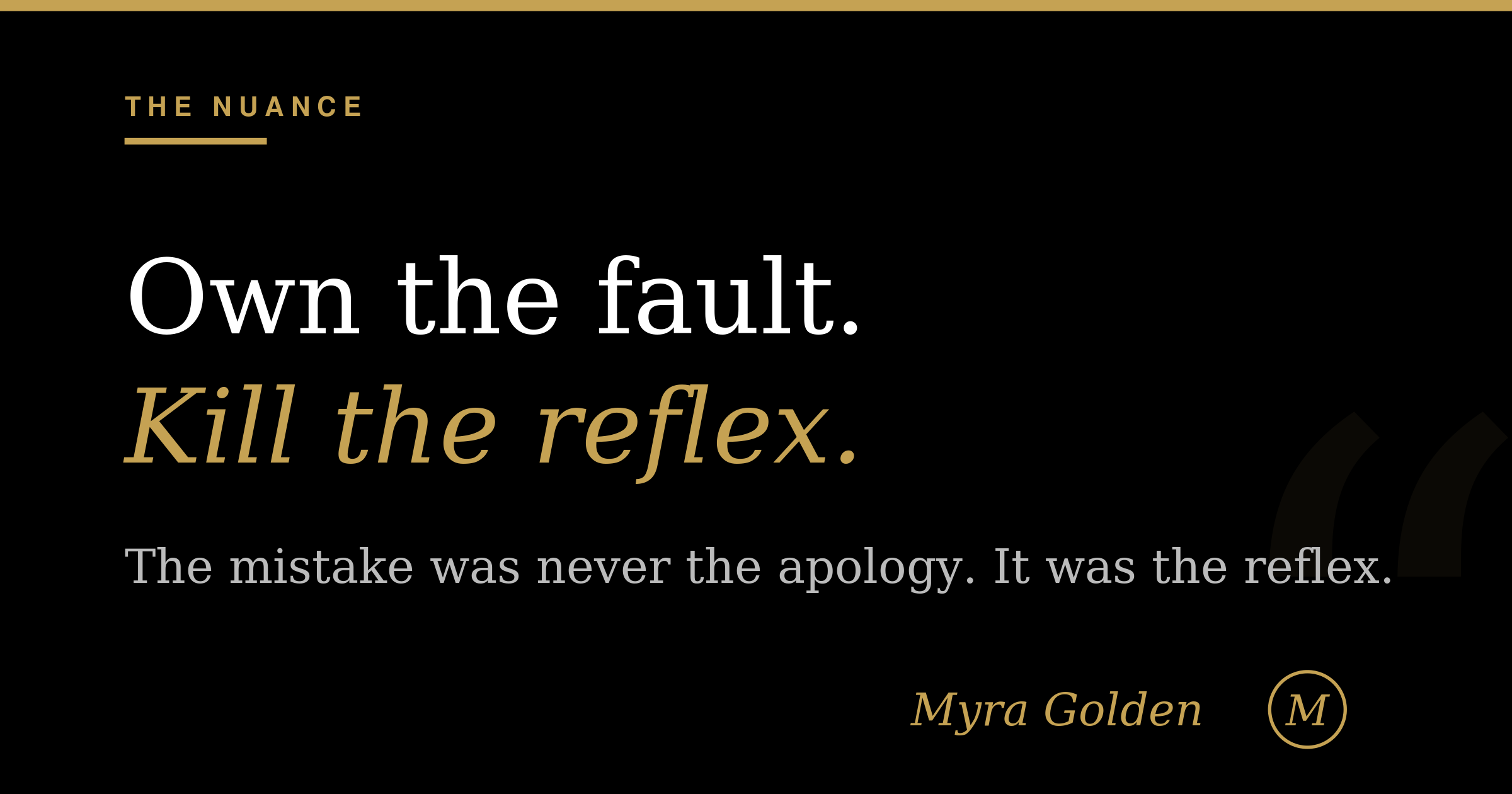
Doug Wojcieszak's work is not anti-apology. Just the opposite. When there is real fault, Sorry Works! says you own it. Specifically. Honestly. You disclose. That is the whole point of the movement, and it is the reason those hospital numbers move.
I am saying the same thing for the contact center.
When your company genuinely failed the customer, your agent should own it, clearly, in plain language. That is not weakness. That is its own kind of authority. The mistake is not the apology. The mistake is the reflexive apology. The "I apologize for the inconvenience" that gets sprayed across every call like air freshener, owning faults that do not exist, before anyone has even found out what happened.
Reserve "I apologize" for the moments your company actually owns the failure. Lead with "I'm sorry" everywhere else. That is the whole discipline.
HOW TO SAY "I'M SORRY" SO IT ACTUALLY WORKS
"I'm sorry" is not a standalone word. Dropped on its own, it is as empty as the apology you just retired.
It works when you attach it to the customer's specific fact.
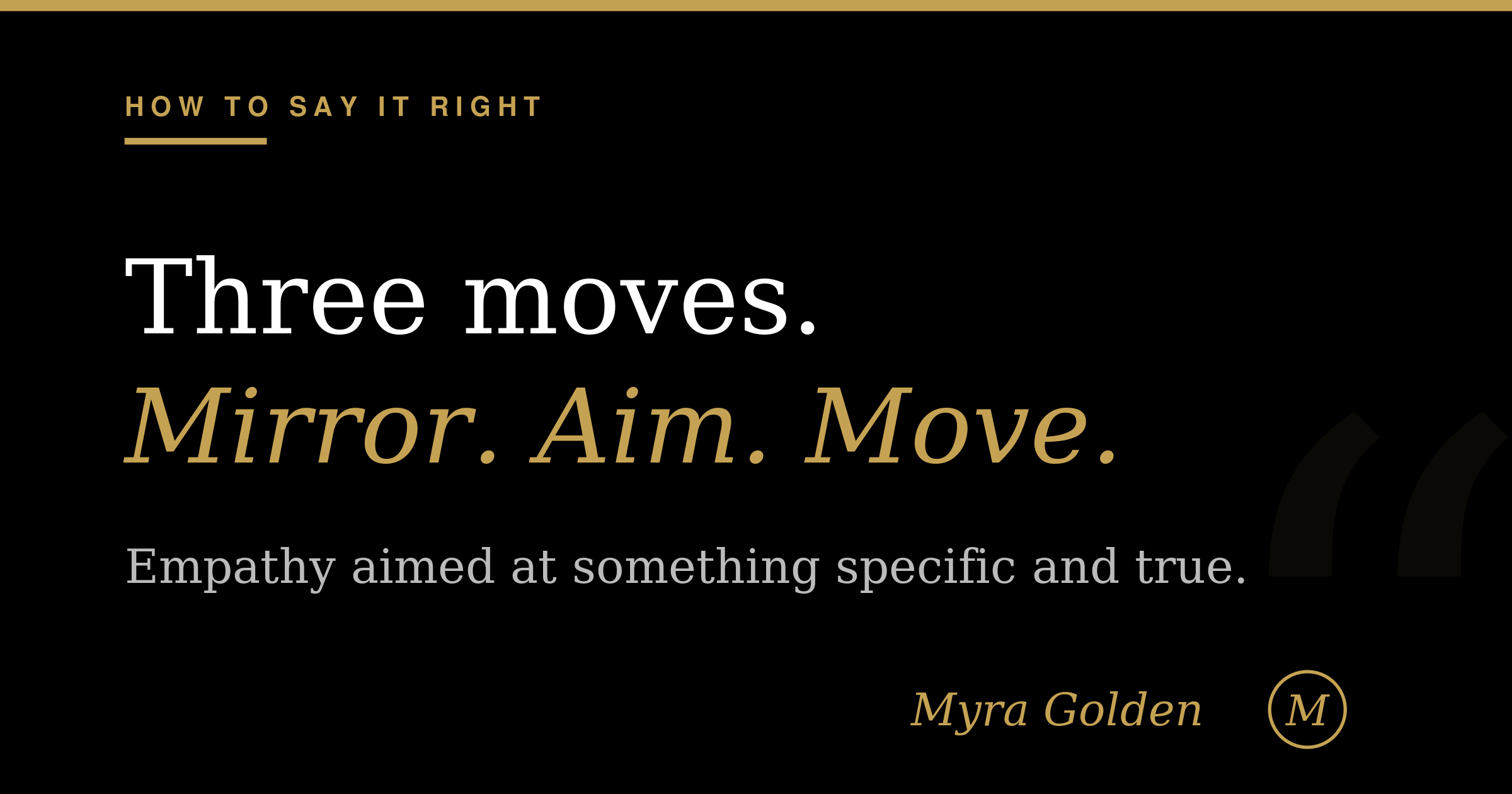
This lives inside the first R of my 3R Conversation Control System™. R1 is Regulate. Before you solve anything, you bring the emotional temperature down, and the move that does it is empathy aimed at something specific and true.
Three moves.
One. Mirror the fact, not the feeling. Repeat the actual thing the customer led with, in their words, slightly calmer. Not "I understand your frustration." They did not say they were frustrated. They said they had been on hold for forty-two minutes. So you say, "I'm sorry you have spent forty-two minutes on hold today." You are sorry about the forty-two minutes. That is a fact. It is true. It costs the company nothing to be true about it.
Two. Aim it at the person, not the policy. "I'm sorry for the inconvenience" is aimed at nothing. "I'm sorry you had to clear your whole afternoon for this" is aimed at a human being who had an afternoon. The customer can feel the difference between a sentence written for everyone and a sentence built for them.
Three. Do not let "sorry" become a hedge. Say it once, cleanly, then move. "I'm sorry you have spent forty-two minutes on hold. Here is what I am going to do." Empathy, then forward motion. The sorry that repeats and circles and apologizes for itself is the sorry that sounds like guilt. Say it like you mean it, because you do, and then redirect.
That is "I'm sorry" done right. It is not soft. It is not a giveaway. It is the most controlled, most precise move in the entire conversation, and it is the difference between a call that settles and a call that becomes a supervisor escalation, a one-star review, or a cancelled contract.
WHAT TO DO MONDAY MORNING
Here is the one move I want every agent on your team to try this week.
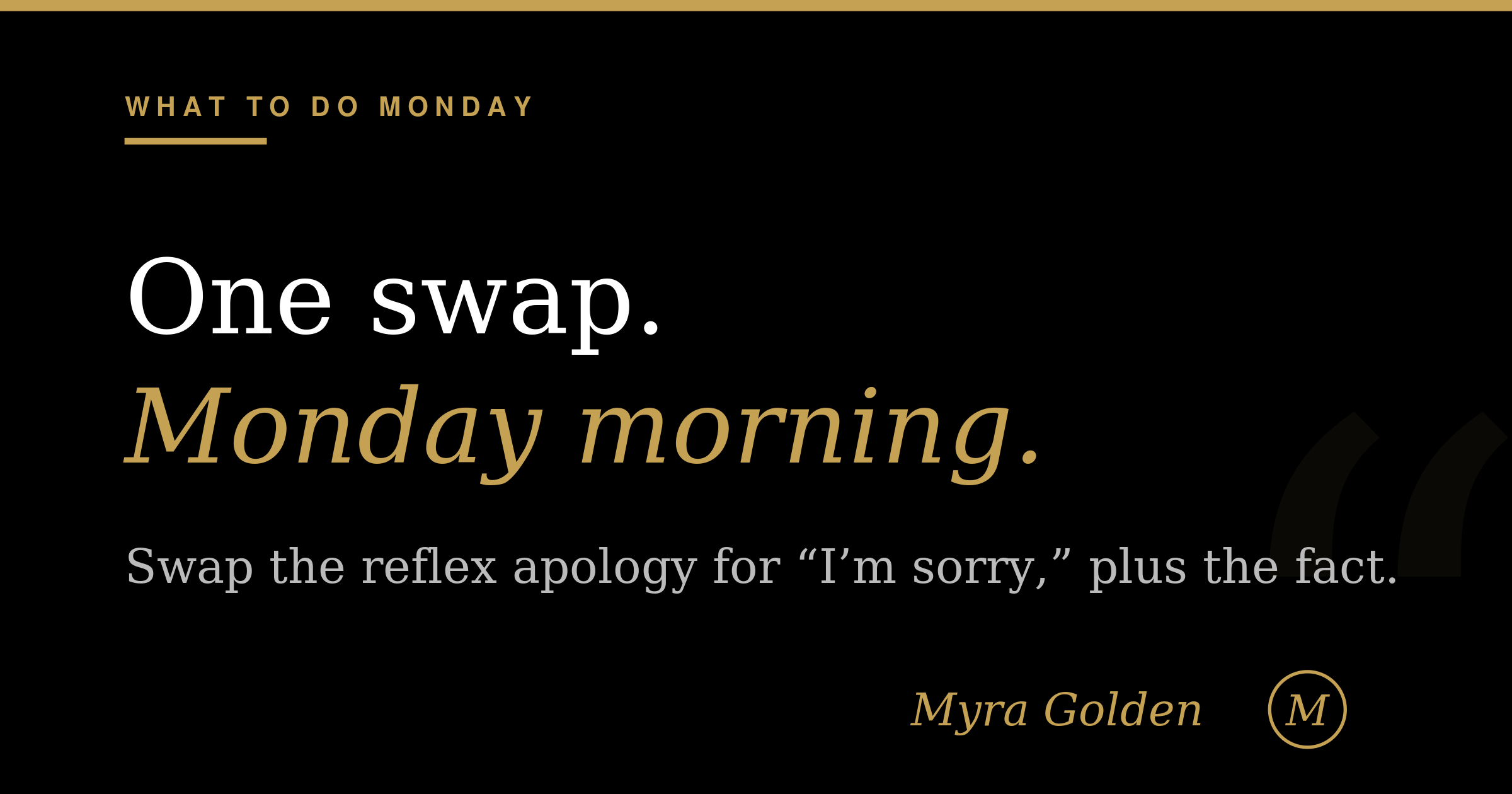
Find every place "I apologize for the inconvenience" lives in your call flow. Every place. Then replace it with "I'm sorry," plus the customer's specific fact. Nothing else changes. Same policies, same systems, same scripts underneath.
Then listen to what happens to the next thirty seconds of those calls.
You will hear it. The customer's voice settling. The pace coming down. The door staying open instead of closing.
WHERE I COME IN
That one swap is small enough to try tomorrow. But the full discipline, getting an entire team to feel the difference between empathy and admission, to do it under pressure, on a hard call, without sliding back into the reflexive crouch, that takes training.
That is what I do.
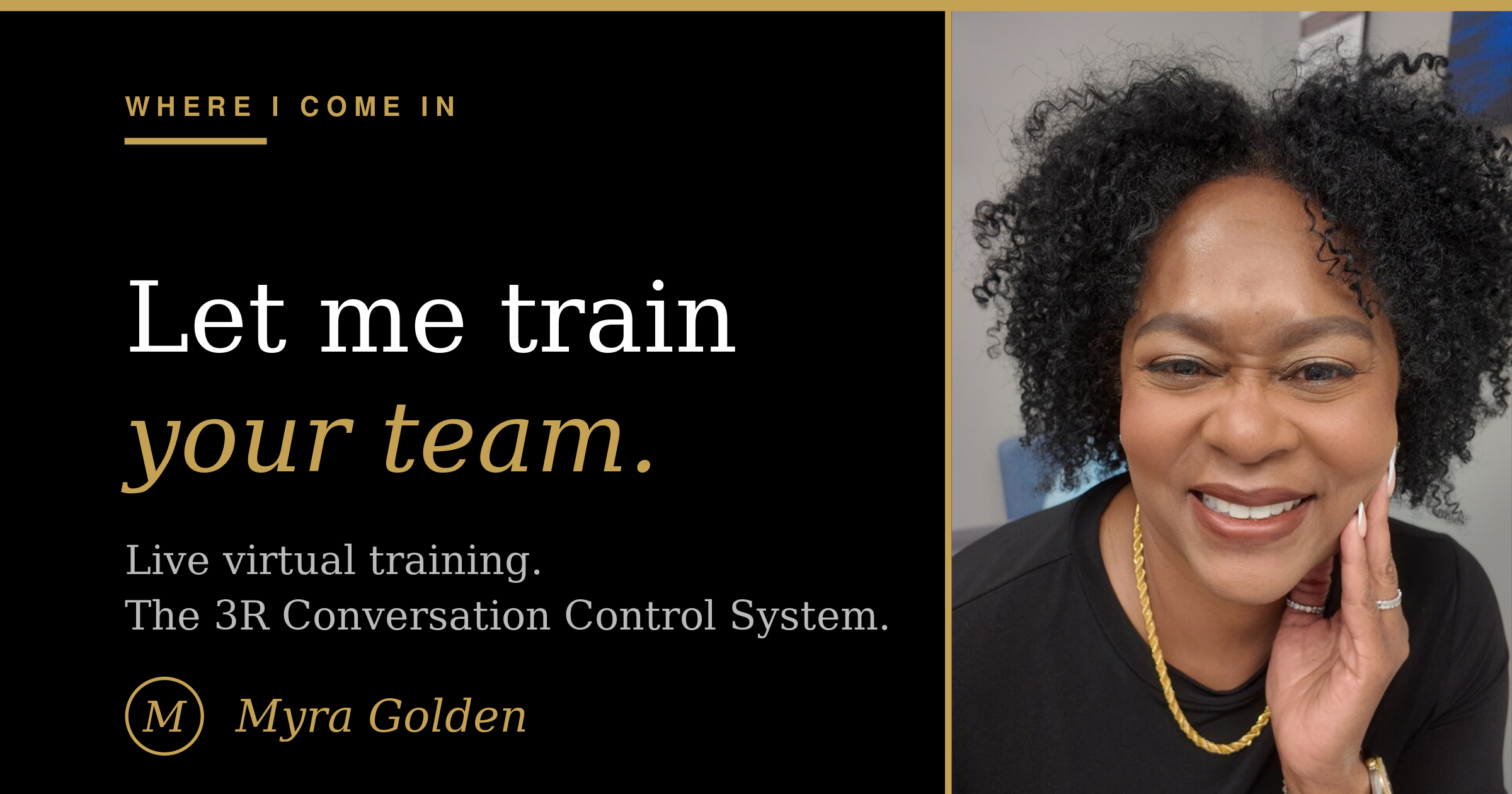
I run live virtual training built around the 3R Conversation Control System. Your whole team, on Zoom, up to two and a half hours, fully customized to your calls and your industry. Real recorded calls. Real role-play. Your team walks out able to hear the difference between "I'm sorry" and "I apologize," and able to use it on the very next call.
I am booking these now, and the calendar between now and August fills fast. If you lead a contact center, a CX team, or any group that handles hard conversations for a living, this page is for you.
Take a look at how the session is structured, and if it is a fit for your team, grab a time and we will scope it together.
THE DOOR
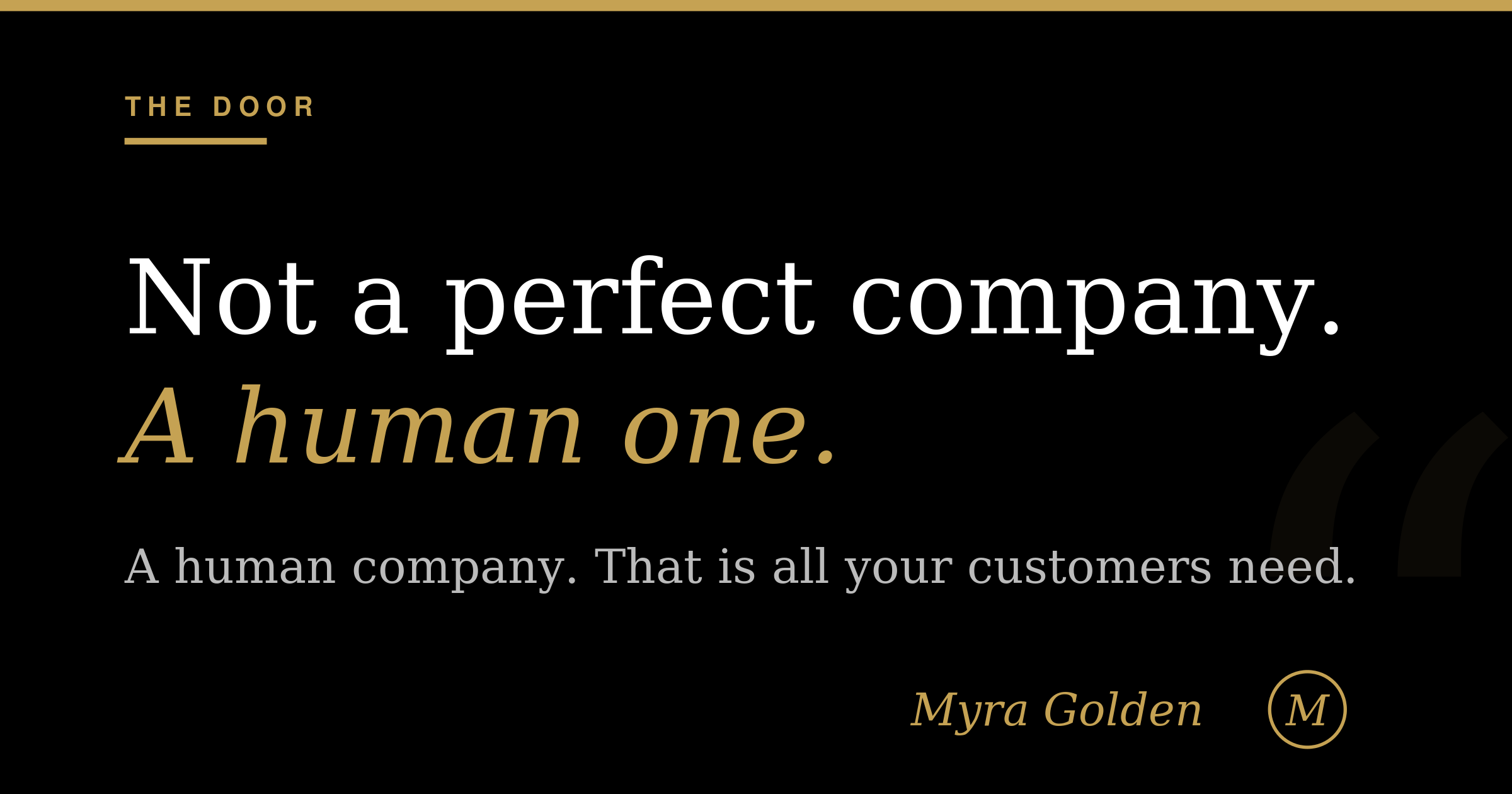
Doug Wojcieszak's family did not need the hospital to be perfect. Hospitals are run by people, and people make mistakes, and everyone knows it.
They needed the hospital to be human. They needed someone to stay on the line.
Your customers need the exact same thing. Not a perfect company. A human one. A person on the other end of a hard moment who keeps the door open instead of letting it close.
That is one sentence. And it is the cheapest, highest-leverage fix in your entire operation.
Stop apologizing. Start saying "I'm sorry." And teach your team to know, in their body, the difference.
You are not alone. You can handle this.
Myra Golden's De-escalation Academy
A psychology-based system that helps professionals stay calm, redirect difficult conversations, and confidently resolve interactions—even when the answer is no.
Used by teams at Fortune 500 companies and NFL guest experience organizations.
Join Myra’s Inner Circle: Insights, Strategies, and Resources for Leaders Who Demand the Best.
Be the first to receive exclusive strategies, curated resources, and behind-the-scenes insights from Myra Golden—crafted for leaders who value excellence.
Your information will remain private and protected—always.
